Story
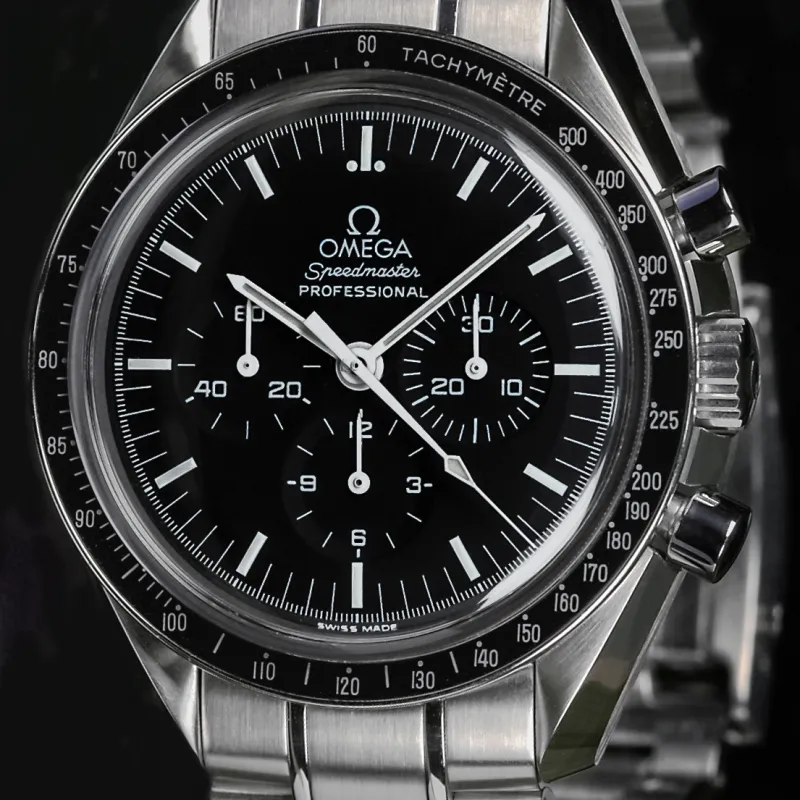
It appeared in 1957 as a chronograph for racing and science. In 1965 it passed NASA's punishing tests, and on Apollo 11 in 1969 it became the 'Moonwatch', the watch that landed on the Moon.
The hand-wound movement passed from Cal. 321 to 861 to 1861, and since 2021 it has carried the anti-magnetic Cal. 3861.
Highlights
- A hand-wound chronograph
- A bezel with a tachymeter scale
- References differ by crystal: acrylic (Hesalite) or sapphire
Official videos


From the brand’s official YouTube channel. Playing a video connects to YouTube.
Which one to choose?
Hesalite or sapphire crystal?
The current model comes in two versions. The Hesalite (acrylic) crystal is the same specification that went to the Moon, with a solid case back; the sapphire crystal resists scratches and shows the movement through the back. The references end in .001 (Hesalite) and .002 (sapphire).
What separates the Cal. 1861 generation from the current Cal. 3861?
In 2021 the movement became Cal. 3861, anti-magnetic and certified for accuracy as a Master Chronometer. The dial went back to a stepped outer edge, and the bracelet was redesigned slimmer. The Cal. 1861 generation (3570.50 and others) has calmer prices and is a common choice for a first Speedmaster.
Isn't hand-winding a nuisance?
You wind the crown every day, and a full wind runs for about two days. Many owners enjoy the winding itself. There is no date.
What to check before you buy
- References split by crystal (Hesalite or sapphire) and by bracelet.